A company is awarded an enormous contract. The monthly production demands rise, but the facility isn’t gaining flooring space, skilled workers or even hours per daytime. A temporary increase in production could be possible, however adding another shift can introduce new demands for labor training, supervision, and quality control.
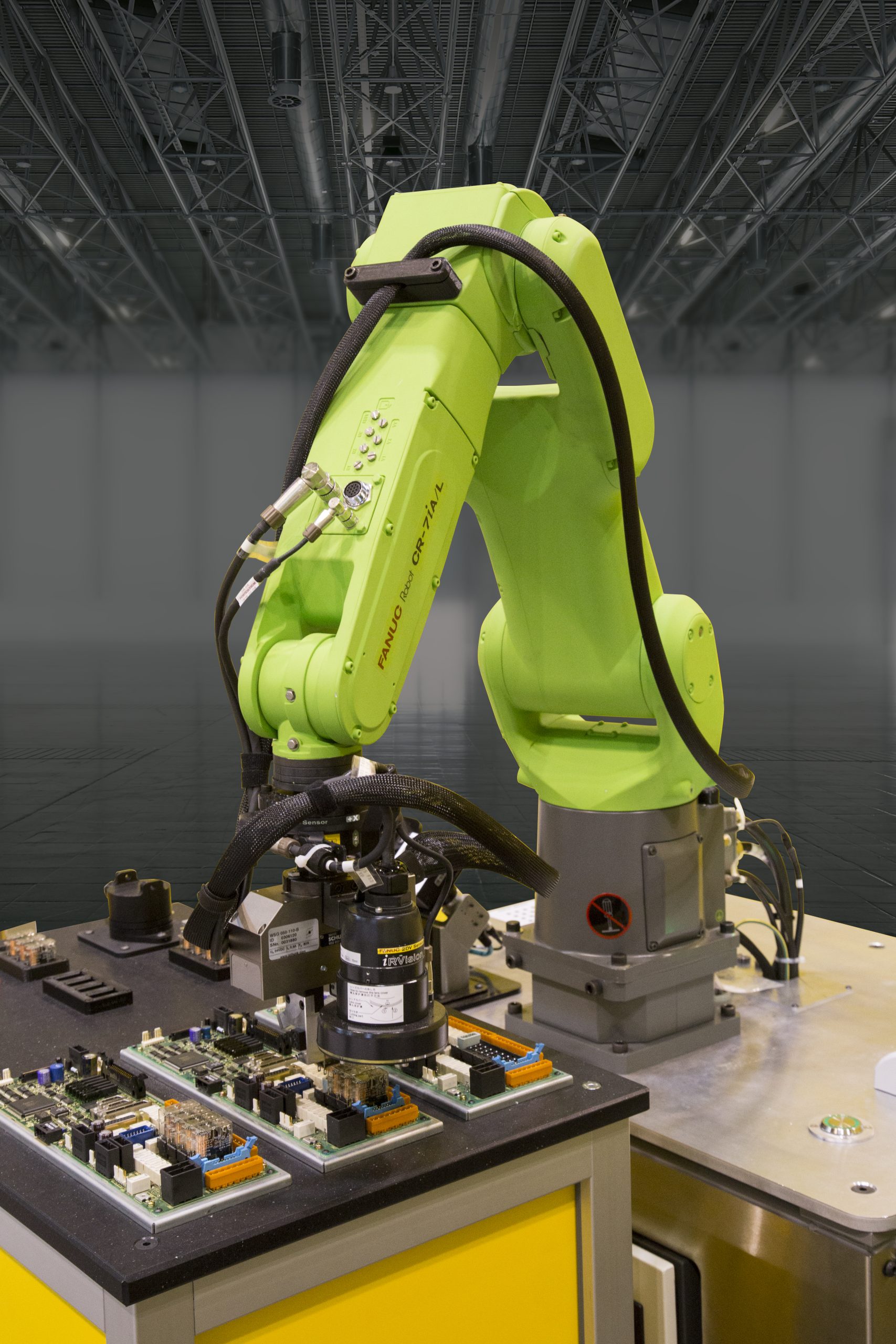
Image credit: automatedsolutions.com.au
Such situations highlight an important function of robotic automation. Robotics isn’t simply about replacing people with the aid of a machine. In the right application it can transform the way manufacturers use the production capacity they have.
Have a look at the amount of time that is lost between the products
Inefficiency in manufacturing isn’t always so significant. Imagine an operator spending 15 seconds looking for a particular component, 10 seconds applying the material and several seconds transferring it. For a single component, the difference in time is not significant. When repeated thousands of times the seconds could result in significant production delays.
Wasted material is no different. A small amount of extra coating or dispensing substances throughout a massive production run can result in a significant expense.
Companies that are considering robot automation Australia projects could gain from examining these minor frequent losses prior to deciding what equipment they need. The needs analysis of ASA is designed to uncover bottlenecks and quality issues, waste, as well as other limitations to process that may affect an automation project.
The robot needs to be able to accommodate the procedure around it.
Robots are just one of the many engineering choices. The system may also need guarding, tooling control, sensors fixtures, conveyors electrical integration, as well as communication with the existing production equipment. Engineers should think about the reach, payload and how the robot is going to be able to move and interact within its environment.
ASA provides conceptual development, system design, CAD simulation and offline programming as part of its approach to FANUC’s robotic automation. The digital simulation allows engineers analyze configurations, estimate cycles times, and evaluate the system prior to making it operational on the customer’s floor. This is particularly useful when there are space constraints or when new robotics have to be incorporated into existing production lines.
The importance of consistency in painting and dispensing
Certain manufacturing processes show the importance of controlled movement especially well. Imagine covering a variety of components. It’s not enough to finish each component quickly. From the beginning of production through the conclusion the speed, movement, distance and application must be controlled.
ASA is a team of experts working with paint and dispensing application across industries, including aeronautics and automotive. In these environments, industrial robotic automation can provide repeatable programmed movement while also reducing employee exposure to physically demanding or potentially hazardous processes.
An improved control over the waste material can also help improve productivity by decreasing the amount of unneeded material consumed.
The System Needs People Even After Installation
Automation doesn’t eliminate the need for expertise in manufacturing. The skills required to manage, maintain, and run the process change.
Employees should be able recognize unusual behavior and resolve issues, and do the proper maintenance. Production requirements can alter, indicating that the processes and programs could require modification later.
ASA provides training on site that covers programming, safety troubleshooting, electrical and mechanical maintenance. The company also provides maintenance and support for checking the condition of equipment and taking care to address wear throughout the system’s lifetime.
Capacity refers to more than the ability to work faster
For Australian manufacturers, increasing capacity doesn’t necessarily mean purchasing an additional building or increasing the amount of labor required to perform repetitive tasks. It is sometimes better to inquire if the manufacturing process can be modified.
ASA has been working on and integrating automation solutions since 2002. It has assisted manufacturers in Australia and also projects in other countries. The approach is a combination of needs analysis and engineering simulation with FANUC integration as well as training and maintenance.
Automation isn’t the main goal. A worthwhile system should give manufacturers something tangible in yield, more stable production and quality, as well as safer processes, lower waste or additional capacity from the factory that it currently operates.