Surface finishing has transformed into an engineering procedure. Today’s industrial landscape coating quality is directly affecting the durability, corrosion resistance and overall product perception. In order to keep up with the demands of clients who are looking for flawless finishes, and improving global standards, numerous manufacturing facilities are turning to paint robots.
Modern paint machines offer programmable precision and a structured motion for applications that formerly relied on the operator’s technique. Automating the spray path and angle, as well as speed, eliminates many irregularities that can lead to uneven film formations or excessive use. This method of coating is predictable, which supports First Time Quality, and minimizes the need for rework.
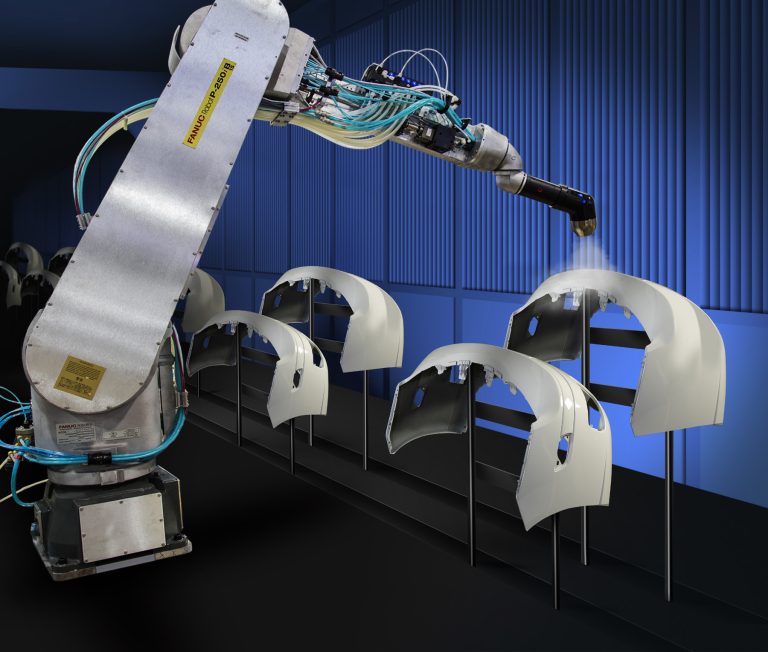
Image credit: automatedsolutions.com.au
Consistency and efficiency are key to the measurement of results
Manual painting typically introduces variations in coverage and thickness because of human fatigue or tiny differences in technique. Paint robots reduce this variation through the use of the same motion patterns in every cycle of production. This consistency ensures an even surface finish as well as optimal material distribution across every part.
The efficiency of transfer from advanced paint systems that use robotics is improved. Overspray is minimized by ensuring a specific distance between the applicator and the component. This allows more paint to reach the target surface. The decrease in material waste results in cost savings. Decreased emission of volatile organic compounds also contribute to environmental compliance.
Integrated fluid handling within paint robotics ensures accurate mixing ratios for multi-component coatings. The inconsistencies can be eliminated which can compromise the quality and integrity of the finished product. The combination of stable flow control and programmable parameters allows producers to fine-tune atomisation and spray patterns in real time without disrupting production.
Productivity and safer working environments
The improved uptime is a major advantage of using a paint robotic system. Robotic paint cells work all the time and with minimal interruption as opposed to manual processes. Once programmed, they provide steady throughput without the requirement for interruptions or continuous monitoring.
In any facility that handles solvent-based or two-component coatings, safety concerns are crucial. Paint atomized can create hazardous environments, especially when working with substances that are flammable, or reactant. Modern paint robots operate without risk in harsh environments. This decreases the chance of exposure to harmful chemicals and enhances the safety of workers.
The conveyor tracking technology improves productivity further through the automated painting of the components while they are moving. This technology increases the working space and ensures that production lines are running efficiently.
Australian Automation Expertise Supporting Industry
It is vital that manufacturers are able to access automation partners who have years of experience. Automated Solutions, a leading robotic integration company in Australia, has earned a reputation for offering advanced robotic services. As FANUC certified robotic integrators with a wealth of experience in automation engineering, the team assists businesses in implementing customized robotic paint solutions aligned with their goals for operation.
Automated Solutions helps manufacturers evaluate their processes and develop robotic paint cells by combining experience from industry with technical expertise. With the help of collaborative planning, simulations and integration of systems, businesses can understand the anticipated performance improvement before installing.
Adopting paint robotics is not simply about automation; it is about measurable improvements in quality safety, efficiency, and productivity. A well-engineered paint robot system transforms surface finishing into a precise, repeatable, and cost-effective operation. With the help of expert automation specialists, manufacturers can strengthen their competitiveness and ensure longevity in a demanding market.